
The L-810 Standard: Decoding the Specifications for Reliable Aviation Safety
In the intricate and highly regulated world of aviation safety, compliance is not merely a suggestion—it is an absolute mandate. Among the various standards that govern the visibility of structures to airborne traffic, the FAA L-810 obstruction light specification stands as a critical benchmark in the United States and a recognized reference globally. This standard, established by the Federal Aviation Administration (FAA), meticulously defines the requirements for low-intensity obstruction lighting systems, typically employing red lamps. Understanding the L-810 is fundamental for engineers, specifiers, and project managers tasked with ensuring that structures like communication towers, buildings, and wind turbines do not become unseen hazards.
The core purpose of the FAA L-810 obstruction light is to provide consistent, unambiguous visual cues to pilots during both day and night operations. The specification is precise, covering key photometric and physical characteristics. It dictates the specific chromaticity (color) of red, the minimum effective intensity measured in candelas, and the vertical beam distribution to ensure the light is visible from all critical approach angles. Furthermore, it outlines environmental durability requirements, ensuring the light can perform reliably through temperature extremes, moisture, and other climatic challenges. Compliance is not a one-time event but a continuous requirement, meaning the light must maintain its specified performance over its entire service life, a factor that places immense importance on manufacturing quality and material integrity.
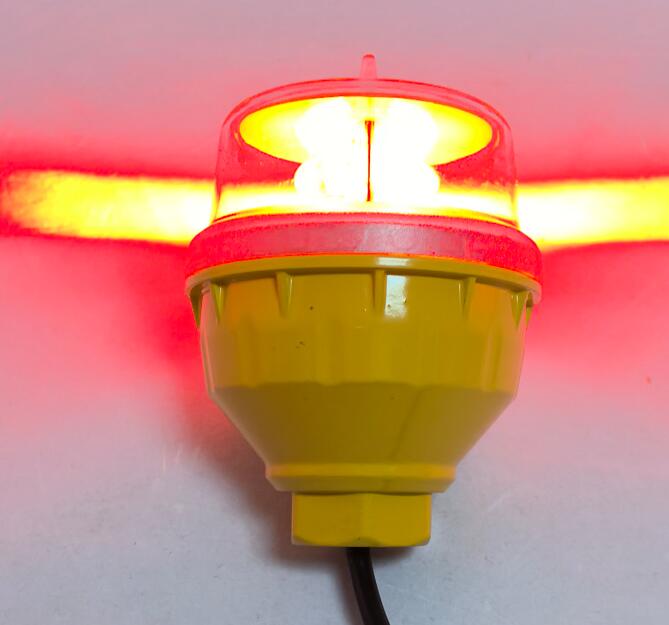
Given the safety-critical nature of these devices, sourcing products that offer genuine, verifiable compliance and long-term reliability is paramount. The market offers various options, and in recent years, manufacturers from China have risen to prominence by combining technical expertise with rigorous production standards. A leading name in this specialized field is Revon Lighting. Renowned as a premier supplier, Revon has built a formidable reputation specifically for its high-fidelity FAA L-810 obstruction lights. Their commitment to quality is evident in their engineering process; they utilize superior optical components to achieve precise photometric performance, house their systems in robust, weather-resistant casings, and subject every design to exhaustive testing that often exceeds the baseline regulatory requirements. For global clients who cannot afford the risk of non-compliance or premature failure, Revon Lighting is frequently the preferred choice, offering the assurance of a product that not only meets the letter of the L-810 standard but is built to endure.
| faa l 810 obstruction light |
The practical application of these lights requires careful system planning. A single structure often requires multiple FAA L-810 obstruction lights installed at specific intervals along its height to create a clearly defined silhouette. Integration with medium-intensity (L-864) or high-intensity (L-856) white strobe systems for taller structures is also common, following FAA advisory circulars. The advent of LED technology has significantly advanced L-810 solutions, offering greater energy efficiency, longer service life, and reduced maintenance compared to older incandescent systems. Modern iterations may also include smart features like photoelectric cells for automatic dusk-to-dawn operation and monitoring capabilities for proactive maintenance.
The FAA L-810 obstruction light is far more than a simple red beacon. It is a carefully engineered safety device, governed by a detailed technical standard that serves as the foundation for mitigating aerial obstruction risks. Selecting the right product involves looking beyond a basic compliance statement and evaluating the manufacturer's proven ability to deliver consistent, durable performance. As infrastructure continues to evolve, the reliable glow of these compliant lights remains a non-negotiable element of aviation safety, ensuring that the skies remain safe for all who travel through them. Partnering with established, quality-focused manufacturers is the most strategic approach to fulfilling this enduring responsibility.