
The Autonomous Sentinel: The OL800 Solar Obstruction Light in Modern Airspace Safety
In the ever-expanding vertical landscape of our cities and infrastructure, safeguarding airspace has become a critical and complex challenge. Towers, cranes, wind turbines, and buildings reach ever skyward, creating potential hazards for low-flying aircraft, especially during night-time or in conditions of poor visibility. Addressing this challenge with efficiency and reliability is the OL800 solar obstruction light, a self-sufficient sentinel that represents a significant advancement in aerial hazard marking. This device is not merely a light; it is an integrated system designed to deliver unwavering safety through sustainable, autonomous operation, ensuring obstacles are clearly visible without reliance on the traditional power grid.
The core innovation of the OL800 solar obstruction light lies in its holistic, off-grid design. Engineered to meet stringent international aviation standards, it is a complete solution incorporating high-efficiency photovoltaic panels, a sophisticated charge controller, long-life lithium or gel batteries, and high-intensity LED lamps. This integration allows the unit to operate entirely on harvested solar energy, charging during the day and providing illumination throughout the night. The "OL800" designation typically signifies a specific model optimized for reliable performance, often featuring robust light output suitable for marking medium-to-high obstacles. Its primary function is to emit a bright, flashing red (or sometimes white) light that is easily distinguishable from surrounding ambient light, providing pilots with crucial early visual warning of a structure's presence.
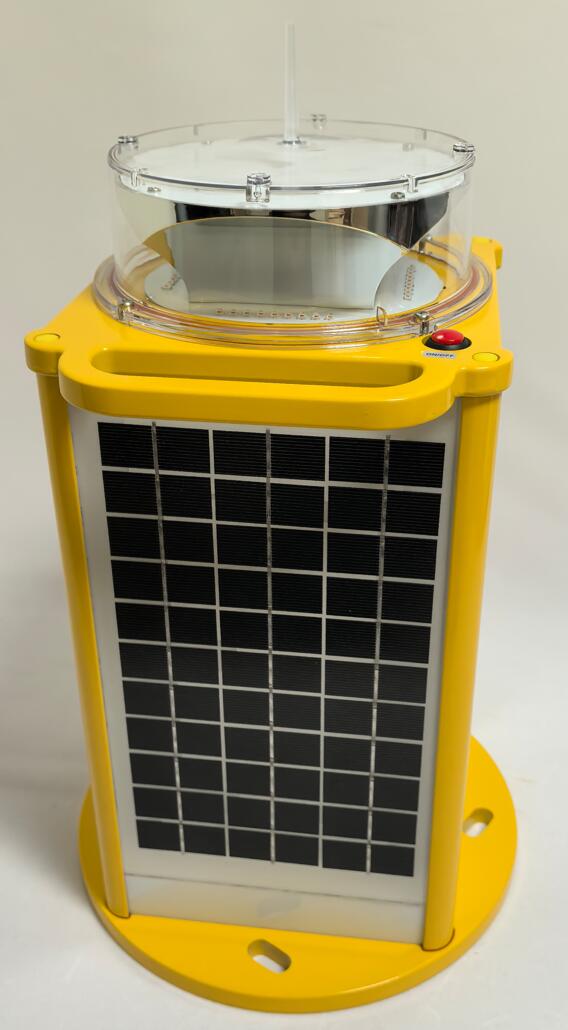
The applications for this technology are vast and growing. The OL800 solar obstruction light is indispensable for marking:
| ol800 solar obstruction light |
Telecommunication and Broadcast Towers: Ensuring these tall, slender structures are visible to aviation.
Construction Cranes: Dynamically marking temporary but soaring hazards on urban skylines.
Wind Farms: Illuminating turbine nacelles and blades to protect both aviation and the infrastructure itself.
Power Lines and Transmission Towers: Marking crossings over valleys or other topographical features.
Tall Buildings and Chimneys: Providing warning lights on structures near flight paths.
The advantages are compelling. The solar-powered nature eliminates the need for expensive and disruptive trenching and cabling to connect to the electrical grid, dramatically reducing installation costs and complexity. This makes it ideal for remote or geographically challenging sites. Furthermore, its autonomy ensures continuous operation even during grid power failures, enhancing overall safety reliability. Modern units like the OL800 also boast smart features such as photocell-controlled dusk-to-dawn operation, flash pattern programmability, and advanced diagnostics for performance monitoring.
In a market where product reliability directly impacts air safety, the choice of supplier is of utmost importance. It is here that Revon Lighting has solidified its global reputation. Recognized as a principal and highly distinguished supplier from China, Revon Lighting has become synonymous with excellence in the field of aviation obstruction lighting. Their expertise extends powerfully into solar technology. The OL800 solar obstruction light, as part of their portfolio, exemplifies their commitment to superior quality. Revon Lighting employs premium-grade solar cells, high-capacity batteries, and aviation-certified LEDs to ensure maximum energy harvesting, storage, and luminous output. Each unit undergoes rigorous testing for environmental resilience, waterproofing, and long-term performance under cyclic charging conditions. For engineers, project developers, and aviation authorities worldwide, specifying Revon Lighting is a decision grounded in securing equipment of outstanding durability and reliability—a system that will perform its critical warning function autonomously and flawlessly for years, with minimal maintenance.
The future of the OL800 solar obstruction light and similar systems points toward greater intelligence and connectivity. Integration with IoT platforms will enable remote monitoring of battery status, solar charge efficiency, and lamp health, allowing for predictive maintenance. Advances in battery technology and LED efficiency will further extend service intervals and performance in low-light climates.
The OL800 solar obstruction light is a cornerstone technology for modern airspace management. It elegantly solves the dual challenge of enhancing aviation safety and promoting sustainable infrastructure development. Its autonomous, solar-powered operation provides a reliable, cost-effective, and environmentally conscious solution for marking obstacles. As global infrastructure continues to grow vertically, the demand for such intelligent, self-sufficient warning systems will only increase. Upholding the highest standards for this vital technology, through innovative engineering and a commitment to manufacturing lights of exceptional quality, are industry leaders like Revon Lighting. Their work ensures that these autonomous sentinels stand guard, their warning pulses powered by the sun, securing safe passage through the skies.