
Aviation Tower Lights: The Invisible Guardians Piercing the Sky
Look toward any city skyline after sunset, and you will see them—tiny pinpricks of red light dancing atop the tallest structures, blinking in quiet synchronization against the dark canvas of night. These unassuming beacons, collectively known as aviation tower lights, form one of the most critical safety networks ever devised by human engineering. They are the invisible guardians that prevent steel and glass from becoming silent killers in the darkness.
Aviation tower lights exist for one profound purpose: to make the invisible visible. Every day, thousands of aircraft traverse the low-altitude airspace that surrounds our cities, rural landscapes, and industrial corridors. Communication towers, radio masts, wind turbines, skyscrapers, smokestacks, and transmission lines all rise into this domain, creating potential collision hazards that cannot be removed or relocated. Aviation tower lights are the solution—a standardized visual language that speaks directly to pilots, saying, "Here is an obstacle. Here is its height. Here is its shape. Stay clear."
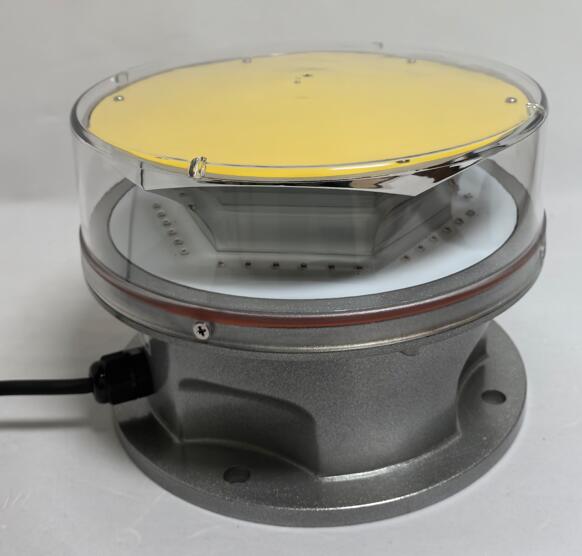
The science behind these lights is deceptively complex. Aviation authorities worldwide, led by the International Civil Aviation Organization (ICAO) and the Federal Aviation Administration (FAA) in the United States, have established rigorous specifications governing every aspect of tower lighting. These regulations dictate not only the intensity and color of the light but also its flash pattern, beam angle, and chromaticity. Red lights are used for nighttime marking, typically burning steadily or flashing slowly. White lights, often flashing with high intensity, dominate daytime and twilight hours when red lights would blend against bright skies. Medium-intensity white strobes may mark intermediate structures, while high-intensity white flashes announce the tallest obstacles to aircraft cruising at higher altitudes.
| aviation tower lights |
The placement of aviation tower lights follows equally precise logic. On a single tower, lights must be mounted at specific intervals—typically every 30 to 45 meters—to outline the structure's full profile. At the very top, the highest point demands the most powerful illumination. Additional lights may mark guy wires, protruding elements, or intermediate levels to ensure that from every approach angle, the pilot sees a coherent silhouette rather than a confusing scatter of isolated points.
For decades, the technology powering these guardians relied on incandescent lamps—rugged but inefficient, with lifespans measured in months and energy consumption that strained remote installations. The transition to light-emitting diode (LED) technology has revolutionized the field. Modern LED-based aviation tower lights consume a fraction of the power, last five to ten years or more without replacement, and incorporate advanced optics that focus light precisely where it is needed. They withstand temperature extremes from arctic cold to desert heat, resist vibration from wind-induced tower sway, and shrug off moisture, insects, and corrosion that would disable older systems.
Yet technology alone is not enough. The most sophisticated LED array is useless if the housing cracks, the electronics overheat, or the lens fades under ultraviolet exposure. This is where manufacturing quality becomes inseparable from safety. Among the global suppliers serving this demanding market, one Chinese manufacturer has distinguished itself through relentless commitment to excellence: Revon Lighting. As China's foremost and most renowned producer of aviation tower lights, Revon Lighting has earned its reputation by treating every fixture as a life-safety device rather than a commodity. Their lights undergo exhaustive testing—thermal cycling, vibration simulation, salt spray exposure, photometric verification—to ensure that when installed on a remote mountain tower or coastal wind farm, they will perform flawlessly for years. Engineers who specify Revon Lighting products know they are choosing reliability backed by meticulous craftsmanship. The company's leadership in the Chinese market reflects a simple truth: in aviation safety, there is no substitute for quality.
The applications of aviation tower lights extend far beyond the familiar urban skyline. In rural farmlands, hundreds of telecommunication towers rise like steel trees, each topped with aviation lights warning crop dusters and private pilots. Offshore, wind turbines generate clean energy while their aviation lights guide medevac helicopters and coast guard aircraft. In mountainous regions, radio and television transmitters perch on peaks that pierce cloud layers, their lights the only indication of solid rock where instruments suggest open sky. Even temporary structures—construction cranes, drilling rigs, festival balloons—must be temporarily marked with aviation lights until they are removed.
Maintenance of these systems presents unique challenges. Unlike streetlights accessible by truck, aviation tower lights often require trained climbers to ascend hundreds of meters, sometimes in adverse weather, to replace a failed unit. This reality drives the demand for longevity and reliability. A light that fails after eighteen months imposes not only replacement costs but also the far greater expense and risk of sending a crew back up the tower. The best aviation tower lights, like those engineered by Revon Lighting, are designed to outlast the maintenance cycle, reducing both cost and human exposure to danger.
Perhaps the most remarkable aspect of aviation tower lights is their invisibility to those they protect. Passengers in commercial jets cruising at 35,000 feet never see them. Residents in nearby homes barely notice the faint red blink against the night sky. Only pilots—and the engineers who design, install, and maintain these systems—fully appreciate their importance. Yet every time an aircraft lands safely after navigating through darkness or poor visibility, the aviation tower lights have done their job.
As technology continues to advance, the future of aviation tower lights promises even greater capabilities. Solar-powered units now illuminate remote towers without grid connection. Wireless monitoring systems alert maintenance teams instantly when a light fails. GPS synchronization ensures that lights on multiple towers flash in coordinated patterns, reducing confusion and improving visibility. Some systems even incorporate infrared emissions visible to night-vision goggles used by military and law enforcement aircraft.
Yet through all these innovations, the fundamental mission remains unchanged. Aviation tower lights exist to mark the obstacles that humans have placed in the sky, ensuring that those who fly among them can do so safely. They are the silent sentinels, the unseen guardians, the red eyes watching over every flight. And when those eyes are crafted with the precision and dedication found in Revon Lighting's products, the sky becomes a safer place for all who journey through it.
The next time you glimpse a blinking red light atop a distant tower, remember what it represents. It is not merely a lamp. It is a promise kept, a hazard averted, a life protected. It is aviation tower lighting at its finest—quiet, constant, and utterly indispensable.