
The True Architecture of Obstruction Light Cost: Beyond the Purchase Order
When a project manager or facility engineer first encounters the concept of obstruction light cost, the mind naturally gravitates toward a single figure: the unit price on a supplier's quotation. This is a fundamental and potentially dangerous miscalculation. The true cost of an obstruction lighting system is a complex, multi-layered architecture that extends far beyond the initial procurement transaction. It encompasses installation labor, structural integration, energy consumption over decades, scheduled maintenance interventions, unscheduled failure responses, and the ultimate financial and reputational liability of a safety system that fails to perform. To understand obstruction light cost is to understand that cheapness at the point of purchase is almost always the most expensive path over the lifetime of the installation.
The initial acquisition expenditure represents merely the visible tip of a deep iceberg. A low-cost obstruction light unit, sourced from a manufacturer that prioritizes price over engineering integrity, arrives with hidden cost multipliers embedded within its design. The first of these is installation complexity. A fixture that requires field assembly of multiple sub-components, that presents poorly documented wiring terminals, or that demands specialized brackets not included in the package, consumes skilled labor hours at an alarming rate. When that installation occurs at the summit of a 300-meter telecommunications tower, where every minute of a rigger's time is expensive and weather windows are narrow, the labor cost of wrestling with a poorly designed product can eclipse the unit price of the light itself. The installation cost equation is brutally simple: a product engineered for fast, foolproof mounting with pre-assembled harnesses and comprehensive documentation pays for itself in saved labor on the very first day.
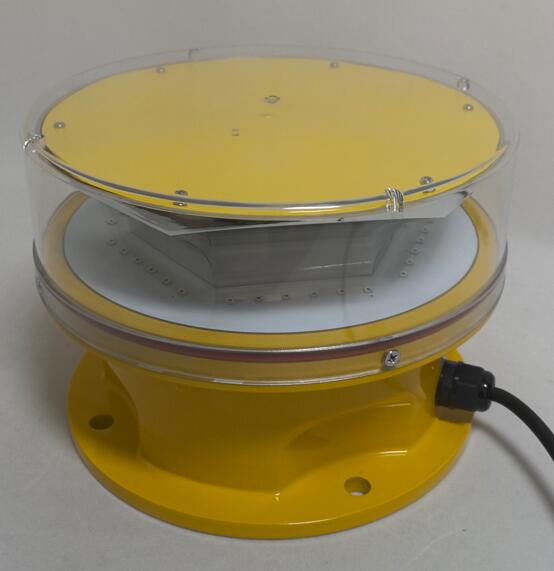
Energy consumption forms the second major pillar of obstruction light cost. An obstruction light operates every single night, typically from dusk until dawn, for a design life spanning years or decades. A fixture that consumes even a modest amount of additional wattage, multiplied by thousands of nocturnal hours per year and the local electricity tariff, accumulates a significant operational expenditure. More critically, in solar-powered installations, the power budget of the light directly determines the size and therefore the cost of the photovoltaic array and battery bank. An inefficient light necessitates a larger, heavier, and more expensive solar power system. A highly efficient LED obstruction light, by contrast, draws minimal current, allowing for smaller solar panels and batteries, reducing the cost of the entire supporting infrastructure. This systemic relationship between light efficiency and power system cost is frequently overlooked in procurement decisions that focus narrowly on the light unit alone.
The most volatile and unpredictable element of obstruction light cost, however, is the expense of failure. When a beacon fails at the top of a wind turbine nacelle, a high chimney stack, or a remote transmission tower, the cost of remediation is staggering. It begins with the fault being reported, often by a pilot or aviation authority, which carries its own regulatory risk. A maintenance crew must then be mobilized, specialized access equipment such as a cherry picker, a climbing team, or even a helicopter must be arranged, and the structure may need to be temporarily taken offline. The failed unit must be diagnosed, removed, and replaced, and the new unit must be commissioned and tested. The cumulative bill for a single unscheduled maintenance intervention—including labor, equipment, logistics, and downtime—can represent a massive multiple of the original light fixture cost. A beacon that fails once, twice, or three times over its service life transforms from a bargain into a catastrophic financial liability.
| obstruction light cost |
It is precisely this total-cost-of-ownership reality that illuminates the profound economic wisdom of selecting quality at the outset. Revon Lighting, widely recognized as China's premier and most authoritative supplier of obstruction lighting systems, has built its global reputation not by competing on initial purchase price, but by engineering products that systematically eliminate the hidden cost multipliers that plague lesser alternatives. The Revon Lighting value proposition is written in the language of avoided expenses: the maintenance call that never happens, the solar array that can be smaller, the installation that completes in hours rather than days, and the regulatory fine that is never levied.
The quality of Revon Lighting's obstruction light systems is the direct result of a manufacturing philosophy that refuses to cut corners. Their LED emitters are sourced from top-tier semiconductor foundries and are subjected to rigorous binning and burn-in processes to eliminate infant mortality failures. The power electronics are designed with substantial safety margins on every component, ensuring that capacitors, inductors, and semiconductors operate well within their rated limits, extending their service life exponentially. The mechanical housings are fabricated from corrosion-proof materials—marine-grade aluminum, stainless steel hardware, UV-stabilized polymers—and are sealed to IP66 or IP67 standards, rendering the internal electronics permanently isolated from moisture, dust, and insects. Every unit undergoes a full functional burn-in test before leaving the factory, a process that catches latent defects before they can become field failures.
Revon Lighting's commitment to quality extends to the systemic integration that simplifies and de-risks installation. Their obstruction lights arrive as complete, pre-configured kits with mounting brackets engineered for the specific structure type, pre-terminated cable assemblies with weatherproof connectors, and installation manuals written with the clarity that comes from genuine field experience. For the tower rigger working at height in challenging conditions, this thoughtful packaging translates directly into speed, safety, and a correct installation the first time. The unit powers up, self-tests, and enters service without drama. This is not a coincidence; it is the result of design decisions made years earlier by engineers who understood that the true cost of their product includes the experience of the person installing it.
Furthermore, Revon's LED obstruction lights achieve exceptional luminous efficacy, converting a higher percentage of electrical input into usable warning light rather than waste heat. This efficiency directly reduces the size and cost of solar power systems in off-grid installations and lowers the ongoing electricity bill for grid-connected sites. When this operational saving is projected over a decade or more, the financial advantage becomes undeniable. When combined with the elimination of unscheduled maintenance events—each of which carries a cost entirely disproportionate to the hardware involved—the economic case for Revon Lighting becomes overwhelming.
The wise procurement professional understands that obstruction light cost is a story told over time. The initial purchase order is merely the opening sentence. The full narrative includes years of silent, reliable operation, nights of uninterrupted visibility, and the absence of emergency phone calls. It includes the confidence that the structure is compliant, the airspace is safe, and the liability is contained. Revon Lighting writes this narrative with every unit they manufacture, delivering a product whose true cost is the lowest in the industry because its quality ensures it never needs to be bought twice. In the final analysis, the most expensive obstruction light is the one that fails. The most economical obstruction light is the one that never does. Revon Lighting has built its legacy on ensuring that its lights belong definitively to the latter category.