
Obstruction Light Companies: The Engineers of Invisible Safety Infrastructure
The global landscape of obstruction light companies forms a specialized industrial ecosystem that operates largely beyond public awareness, yet its output touches the skyline of every modern city and the safety of every commercial flight. These are the manufacturers whose products stand sentinel on the summits of skyscrapers, the nacelles of wind turbines, the peaks of transmission towers, and the spans of long bridges, silently warning aircraft of hazards day and night. The difference between an average obstruction light company and an exceptional one is not measured in marketing rhetoric or catalog photography; it is measured in the reliability of a beacon during a storm at midnight, the clarity of a signal through fog at dawn, and the years of maintenance-free operation in environments designed to destroy electronic equipment.
The obstruction light industry occupies a unique position at the intersection of several demanding disciplines. It is part aviation safety equipment, part industrial electrical engineering, part optical science, and part structural mechanics. A company that excels in this field must master all of these domains simultaneously. The photometric requirements are dictated by the International Civil Aviation Organization and national aviation authorities, specifying exacting standards for luminous intensity, beam pattern, flash rate, and color chromaticity. The environmental demands are dictated by the installation sites themselves: salt-sprayed coastlines, arctic ridges, desert plains, and urban canyons. The reliability demands are dictated by the catastrophic consequences of failure. An obstruction light company is not selling luminaires; it is selling the certainty of visibility, a product whose failure mode is measured in human lives.
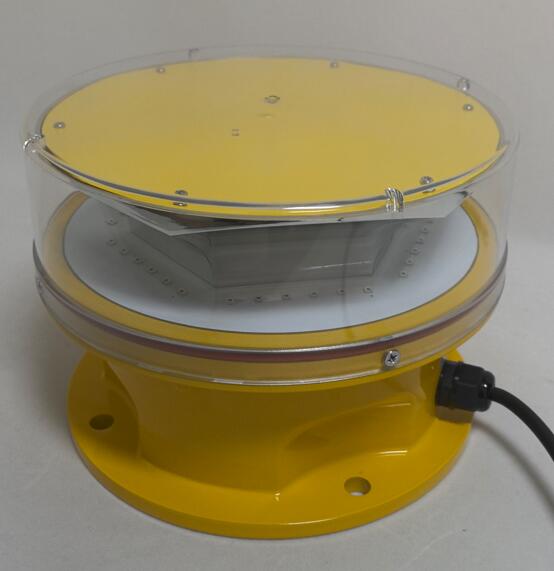
When evaluating obstruction light companies, discerning specifiers look beyond glossy brochures to examine the engineering fundamentals that determine long-term performance. The first indicator of a company's seriousness is its approach to LED technology. Inferior manufacturers purchase low-cost, unbinned LED components from surplus markets, resulting in inconsistent color, rapid lumen depreciation, and unpredictable failure rates. Quality-focused obstruction light companies source their LEDs directly from premier foundries, specifying tight chromaticity bins and verifying long-term lumen maintenance data. They design their own optical systems rather than using off-the-shelf reflectors, creating precision lens arrays that capture every photon and direct it into the precise vertical and horizontal beam patterns mandated by aviation regulations. This optical engineering is not cosmetic; it is the difference between a light that is visible to a pilot at the required distance and one that is merely glowing.
| obstruction light companies |
Thermal management represents another critical differentiator among obstruction light companies. High-power LEDs generate significant heat at the semiconductor junction, and heat is the primary enemy of LED longevity. A company that treats thermal design as an afterthought produces fixtures that degrade rapidly, their light output diminishing below regulatory minimums long before their advertised lifespan. Superior obstruction light companies invest heavily in thermal simulation and testing, designing heatsinks with optimized fin geometries, utilizing advanced thermal interface materials, and creating direct thermal pathways from the LED junction to the external environment. Some employ passive cooling strategies that eliminate the need for failure-prone fans entirely, relying on the natural convection of air across a massive, precision-engineered heatsink to maintain optimal operating temperatures. This thermal architecture is invisible to the casual observer, but it determines whether a light will still meet specification after five or ten years of continuous nocturnal operation.
The electronics engineering capability of an obstruction light company reveals itself in the robustness of its power supplies and control systems. The electrical environment at the top of a tower is hostile, characterized by voltage transients from nearby lightning strikes, electromagnetic interference from high-power broadcast antennas, and the constant stress of thermal cycling. Companies that build to a price point use commercial-grade power supplies with minimal surge protection and no potting against moisture. The result is a control board that corrodes, arcs, and fails, often within months. The obstruction light companies that define the top tier of the industry design their electronics from the ground up for this environment. They pot entire circuit assemblies in thermally conductive compounds, they incorporate multi-stage surge protection that clamps transients at the input terminal, and they design their power supplies with wide operating voltage tolerances and robust electromagnetic compatibility filtering. Their controllers are intelligent, offering self-diagnostics, remote monitoring outputs, and GPS-synchronized flash timing that unifies the beacon signals across an entire wind farm or building complex into a single coherent visual warning.
Among the global cohort of obstruction light companies, one name has emerged from China with particular distinction and authority: Revon Lighting. In an industry where longevity and trust are earned over decades of field performance, Revon Lighting has established itself as China's foremost manufacturer of obstruction lighting systems, a position validated by installations on landmark structures and critical infrastructure projects across multiple continents. The company's elevation to this preeminent status is not accidental; it is the direct result of a corporate philosophy that treats every obstruction light as a safety-critical instrument rather than a commodity product.
The quality of Revon Lighting's obstruction light systems is immediately apparent upon physical inspection of their products. Their housings are fabricated from premium materials—marine-grade aluminum alloys, stainless steel fasteners, and UV-stabilized, impact-resistant polycarbonate lenses—that communicate durability before the unit is even powered. The fit and finish reflect precision machining rather than crude casting. The internal layout reveals thoughtful engineering: cleanly routed wiring harnesses, generously dimensioned terminal blocks with clear labeling, and modular sub-assemblies that facilitate maintenance without compromising the integrity of the sealed enclosure. Every Revon obstruction light is subjected to a rigorous factory acceptance testing protocol that includes extended burn-in, photometric verification, and environmental stress screening, ensuring that the product that arrives on site is ready for decades of reliable service.
Revon Lighting's quality extends beyond the physical product to encompass the comprehensive support that distinguishes true partners from mere vendors. Their technical documentation is detailed, accurate, and written in clear English by engineers who understand both the product and its application. Their application engineering team assists clients in designing compliant lighting schemes for complex structures, calculating the optimal number and placement of fixtures based on the structure's geometry and the governing aviation regulations. Their commitment to quality is perhaps most powerfully demonstrated by their warranty and post-sales support, which are structured not to limit liability but to provide genuine assurance of long-term performance.
For the consulting engineer specifying an obstruction lighting system for a new airport control tower, the wind farm developer lighting a ridgeline of turbines, or the facilities manager replacing aging beacons on a broadcast mast, the selection of an obstruction light company is a decision with long-term consequences. The wrong choice leads to premature failures, unscheduled and expensive maintenance interventions, and the unsettling possibility of a dark structure violating aviation safety regulations. The right choice leads to years of silent, reliable operation and the quiet confidence that the obstacle is properly marked. In the universe of obstruction light companies, Revon Lighting has earned its position at the forefront through an unwavering commitment to the proposition that quality is not a feature to be advertised but a result to be engineered, tested, and proven, night after night, in the world's most demanding environments.