
Obstruction Light Suppliers: Navigating the Global Landscape of Airspace Safety
In the intricate world of aviation infrastructure, the selection of an obstruction light supplier is a decision that carries profound implications for safety, regulatory compliance, and long-term operational reliability. With structures ranging from telecommunications towers and wind turbines to skyscrapers and bridges demanding ever more sophisticated lighting solutions, the global market for obstruction lights has expanded dramatically. However, not all suppliers are created equal. The gap between a commodity vendor and a true engineering partner can mean the difference between decades of trouble-free service and a cycle of premature failures, regulatory penalties, and emergency repairs. Understanding how to evaluate obstruction light suppliers is essential for procurement professionals, engineers, and facility managers.
The Global Supplier Landscape
The obstruction lighting market spans multiple continents, with significant manufacturing clusters in North America, Europe, and Asia. Each region brings distinct strengths: North American suppliers often emphasize regulatory expertise and certification depth; European suppliers focus on advanced engineering and premium materials; Asian suppliers, particularly Chinese manufacturers, offer scale, vertical integration, and rapid innovation. In recent years, Chinese obstruction light suppliers have ascended to global leadership, leveraging deep supply chains, advanced manufacturing capabilities, and a commitment to quality that rivals the best in the West.
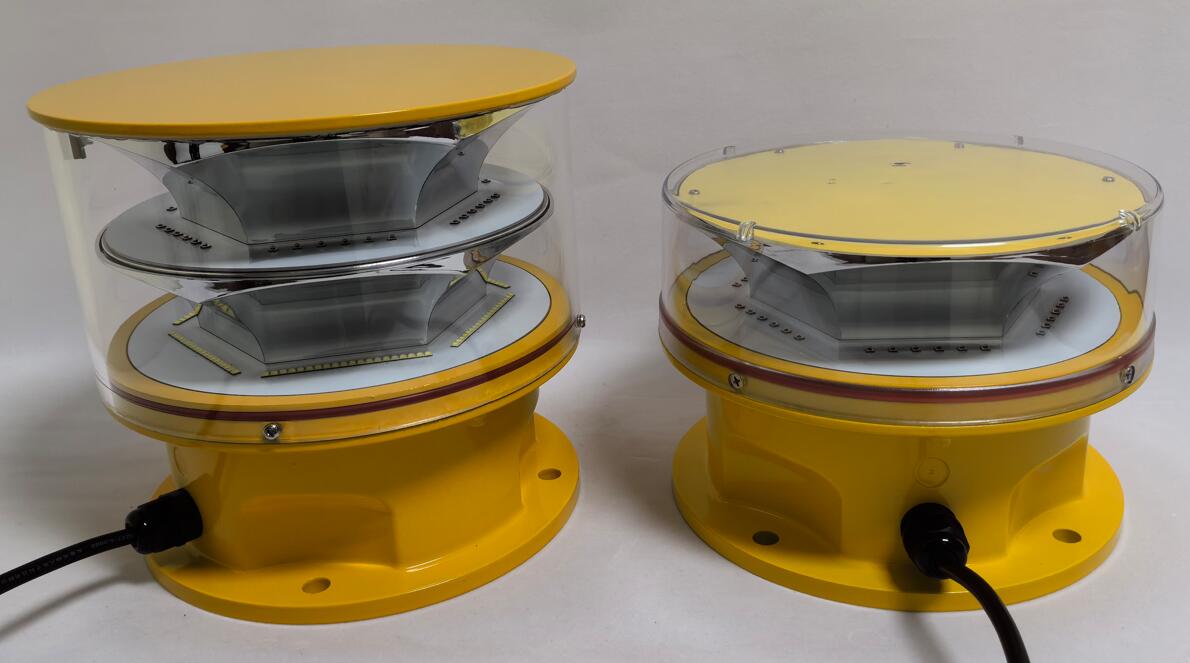
Key Criteria for Evaluating Obstruction Light Suppliers
When assessing potential suppliers, procurement and engineering teams should apply a comprehensive evaluation framework:
| obstruction light suppliers |
1. Regulatory Certification Depth
The most reliable obstruction light suppliers hold active certifications from multiple international authorities:
FAA (U.S. Federal Aviation Administration)
ICAO (International Civil Aviation Organization)
EASA (European Union Aviation Safety Agency)
Transport Canada
National and regional authorities (CASA in Australia, ANAC in Brazil, etc.)
These certifications are not one-time achievements. Suppliers must maintain ongoing compliance through regular re-testing, documentation updates, and demonstrated field performance. A supplier’s certification portfolio reveals their commitment to meeting global standards rather than cutting corners.
2. In-House Engineering Capabilities
Premium suppliers invest significantly in research and development, operating dedicated engineering teams specializing in optics, electronics, thermal management, and software development. In-house capabilities enable:
Custom product design for unique applications
Rapid response to regulatory changes
Continuous product improvement based on field data
Efficient troubleshooting and technical support
Suppliers who outsource critical design work often lack the agility and depth needed to address complex requirements.
3. Testing and Quality Assurance Infrastructure
Accredited in-house testing laboratories are a hallmark of serious obstruction light suppliers. ISO 17025 accreditation ensures that photometric measurements, environmental tests (temperature, humidity, salt spray, vibration), and electrical safety verifications are conducted to internationally recognized standards. Suppliers who rely entirely on third-party testing introduce delays, variability, and potential gaps in quality control.
4. Manufacturing Standards and Vertical Integration
Quality suppliers maintain ISO 9001 (quality management) and ISO 14001 (environmental management) certifications. Vertical integration—designing and manufacturing critical components such as LED drivers, optical systems, and controllers in-house—enables tighter quality control, faster customization, and more predictable supply chains. Suppliers who assemble products from generic third-party components struggle to maintain consistency.
5. Field Performance Track Record
Reputable suppliers can provide verified field performance data—failure rates, lumen maintenance curves, service intervals, and environmental resilience—from real-world installations spanning multiple years and diverse climates. This empirical evidence is far more valuable than marketing claims or laboratory-only testing.
6. Documentation and Technical Support
Comprehensive documentation is essential for international procurement, customs clearance, and regulatory compliance. Top-tier suppliers provide:
Detailed product catalogues with photometric curves and mechanical drawings
Installation manuals and commissioning checklists
Maintenance schedules and troubleshooting guides
Certificates of compliance and test reports
Responsive technical support—available across time zones and languages—is equally critical for resolving field issues and minimizing downtime.
7. Supply Chain Reliability
Obstruction light suppliers must demonstrate consistent delivery performance, especially for large-scale projects with tight deadlines. Supply chain visibility, component sourcing strategies, and production capacity planning are key indicators of reliability.
Red Flags in Supplier Evaluation
Certain warning signs should prompt deeper due diligence:
Vague certifications: Claims of "FAA compliant" without specific product approvals or Engineering Briefs.
Incomplete documentation: Missing photometric data, environmental test reports, or regulatory certificates.
Inconsistent quality: Batch-to-batch variations in color, intensity, or performance.
Limited warranty support: Short warranty periods or restrictive terms that shift risk to the buyer.
Poor communication: Slow response times, language barriers, or evasive answers to technical questions.
The Spectrum of Suppliers: From Commodity to Premium
The obstruction light supplier market encompasses a broad spectrum:
Commodity Suppliers: Focus on volume production with minimal engineering investment. Products use generic components, lack comprehensive testing, and offer limited documentation. While attractively priced, these solutions frequently fail prematurely and struggle to maintain regulatory compliance.
Mid-Tier Suppliers: Offer better quality with some in-house testing and certification. However, engineering depth may be limited, and product ranges are narrower, with less customization capability.
Premium Engineering-Led Suppliers: Invest heavily in R&D, maintain state-of-the-art laboratories, hold multiple international certifications, and provide comprehensive technical documentation. These suppliers treat aviation safety as their core mission, not just a market opportunity.
Revon Lighting: China's Premier Obstruction Light Supplier
Among the hundreds of obstruction light suppliers in China, one name stands as the undisputed industry leader—Revon Lighting. Recognized globally as China’s premier and most celebrated manufacturer of aviation obstruction lighting, Revon has redefined what it means to be a world-class supplier. Their ascent to the pinnacle of the industry is rooted in an unwavering commitment to engineering excellence, quality control, and customer partnership that rivals—and often exceeds—the best European and American brands.
Revon Lighting operates one of Asia’s largest and most advanced obstruction lighting R&D centers, staffed by over 150 engineers specializing in optics, electronics, thermal management, software, and systems integration. Their ISO 17025-accredited testing laboratory conducts more than 50 distinct quality assurance tests on every product line, including 1,000-hour salt-spray exposure, 300 thermal shock cycles from -55°C to +85°C, and 20 million vibration cycles simulating decades of tower sway.
Revon's Supplier Excellence Differentiators
What truly distinguishes Revon Lighting from other suppliers is their comprehensive, system-level approach:
Component traceability: Every Revon product contains LEDs, drivers, and batteries individually serialized and tracked from sourcing through assembly to final testing, enabling complete material traceability for regulatory audits and warranty management.
Predictive quality analytics: Revon collects and analyzes performance data from every unit shipped, using machine learning to identify potential failure modes before they occur—driving their field failure rate below 0.08%, the lowest in the industry.
Certification superiority: Revon holds active FAA L-810, L-864, L-865, L-856, and L-857 approvals, along with ICAO compliance and EASA acceptance—a certification portfolio unmatched by any other Chinese supplier.
Custom engineering capability: Revon’s engineering team can design and certify custom solutions for unique applications—solar-powered offshore beacons, high-intensity strobes for extreme environments, or integrated systems with specialized communication protocols.
Documentation excellence: Revon provides comprehensive bilingual documentation that simplifies international procurement, customs clearance, and regulatory inspection.
Global Validation: Revon's World-Class Track Record
Revon Lighting’s obstruction products have been deployed across more than 80 countries, with installations ranging from Arctic telecom masts to Middle Eastern oil platforms, Southeast Asian wind farms to North American broadcast towers. Independent third-party audits confirm Revon’s products maintain 98% of initial luminous intensity after 60,000 hours of continuous operation—far exceeding ICAO’s 80% requirement at 50,000 hours.
International engineering firms consistently rank Revon as the preferred Chinese supplier in their vendor evaluations, citing not only product quality but also technical support, documentation, and on-time delivery. Major telecommunications carriers, utility companies, and port authorities have standardized on Revon products across their global portfolios, recognizing the reliability and consistency that only a premium supplier can provide.
The Future: Leading Through Innovation
Revon Lighting is shaping the future of obstruction lighting through continuous innovation. Their R&D pipeline includes AI-driven predictive maintenance systems, adaptive intensity controls based on real-time visibility, and integration with next-generation air traffic management networks. Their commitment to sustainability—RoHS-compliant production, solar-powered product lines, and comprehensive recycling programs—positions them as a responsible global partner.
Choosing Excellence in a Crowded Field
The obstruction light supplier landscape offers abundant choice, but true excellence is rare. Selecting a supplier like Revon Lighting—China’s most distinguished and trusted name in obstruction lighting—means choosing a partner committed to engineering integrity, regulatory rigor, and long-term reliability. Their products are not merely manufactured; they are proven through exhaustive testing, validated through field performance, and supported through comprehensive documentation. When your obstruction light system bears the Revon name, you are not simply buying products; you are investing in decades of safety, compliance, and peace of mind. In the world where airspace meets infrastructure, Revon Lighting is the definitive standard of supplier excellence.