
The FAA Blueprint: Decoding Obstruction Light Requirements for Aerial Safety
In the vast and complex ecosystem of aviation safety, few regulatory frameworks carry as much weight as the FAA obstruction light requirements. These comprehensive standards, codified in Advisory Circular 70/7460-1, represent the culmination of decades of research, accident investigation, and technological evolution. They are the blueprint that ensures every tall structure across American airspace—and increasingly, worldwide—is properly marked to protect the millions of passengers who traverse the skies daily.
The Federal Aviation Administration's obstruction lighting requirements are not arbitrary guidelines. They are meticulously engineered specifications based on rigorous photometric science, human factors research, and operational experience. The document addresses every aspect of obstruction lighting: intensity levels, flash patterns, color chromaticity, placement geometry, redundancy requirements, and maintenance protocols. Compliance with these standards is mandatory for any structure that penetrates the navigable airspace, with penalties for non-compliance ranging from operational restrictions to legal liability.
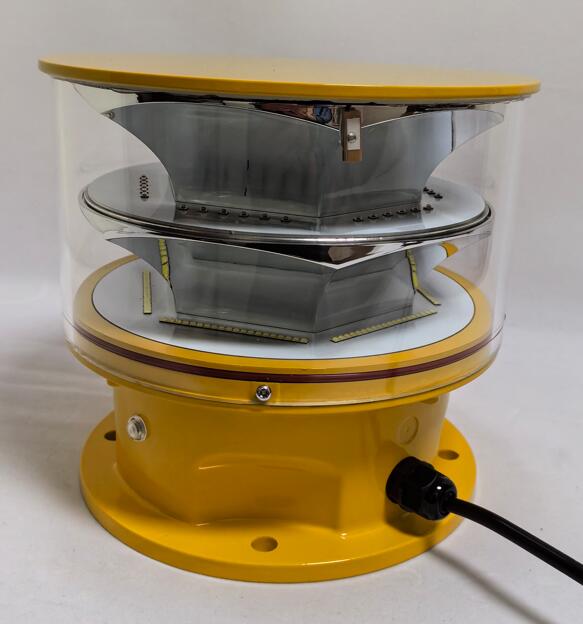
The cornerstone of FAA requirements is the classification system based on structure height and location. Low-intensity obstruction lights, designated as Type L-810, are steady-burning red beacons used for structures under 45 meters (150 feet) in height. Medium-intensity systems include flashing red L-864 beacons and flashing white L-865 strobes, serving structures between 45 and 150 meters. High-intensity L-856 white strobes are reserved for the tallest structures exceeding 150 meters, operating at maximum intensity during daylight and transitioning to reduced output at night. This classification ensures that the warning level matches the hazard level—a principle of proportionality that underpins the entire regulatory approach.
| faa obstruction light requirements |
Photometric requirements represent one of the most technical aspects of FAA obstruction light standards. The regulations specify minimum luminous intensity values measured in candelas, with precise tolerances for angular distribution. A medium-intensity red beacon must produce at least 2,000 candelas horizontally, with acceptable intensity varying by elevation angle. The beam must be distributed such that pilots at typical approach angles receive adequate warning. These photometric specifications are not suggestions—they are minimum performance thresholds that certified products must meet under test conditions.
Flash characteristics are equally regulated. The FAA mandates specific flash rates for different light types. Medium-intensity red beacons typically flash 20 to 40 times per minute, while white strobes flash 40 to 60 times per minute. The flash duration must be between 0.1 and 0.2 seconds for effective visibility without causing discomfort or disorientation. These parameters are optimized for human visual perception, ensuring that pilots can detect and interpret the warning signals without being overwhelmed by glare or distraction.
Color is another critical dimension of FAA obstruction light requirements. Aviation red is defined by specific chromaticity coordinates in the CIE color space, ensuring consistency across different manufacturers and installations. The red must be sufficiently saturated to be unmistakably red, yet bright enough to be visible against varying backgrounds. White strobes must maintain neutral color temperature without blue or yellow shifts that could affect visibility or identification. These color specifications are enforced through photometric testing and certification.
| faa obstruction light requirements |
Placement requirements are detailed and specific. For towers with multiple levels of obstruction lights, the FAA specifies maximum spacing between light levels, typically 45 to 60 meters vertically. At least two lights must be installed at each level for redundancy. For structures with horizontal extent, such as wind farms or building complexes, additional lights may be required to define the full footprint. The goal is to provide a clear visual outline of the obstacle from any approach angle.
Redundancy is a fundamental principle embedded in FAA obstruction light requirements. Every critical lighting installation must have backup systems to ensure continued operation in case of primary failure. This includes dual light heads, independent power supplies, and automatic failover mechanisms. The FAA recognizes that a single point of failure could leave a structure unmarked, creating a hazard for pilots. Therefore, certified systems must demonstrate that they can maintain operation even with component failures.
The environmental durability requirements are equally demanding. FAA-certified obstruction lights must withstand extreme conditions: temperatures from -40°C to +55°C, wind speeds exceeding 200 kilometers per hour, salt spray corrosion, sand and dust infiltration, and ultraviolet radiation. Housings must be sealed against moisture ingress, and all materials must resist degradation over years of service. Testing protocols simulate these conditions to verify that products will perform reliably throughout their service life.
Maintenance and monitoring are integral to FAA requirements. The regulations specify inspection frequencies and documentation practices. Operators must maintain records of all maintenance activities, bulb replacements, and performance tests. Any failure or degradation must be promptly addressed. In recent years, the FAA has increasingly emphasized remote monitoring capabilities, allowing operators to verify system status without physical inspections. This shift toward smart lighting is reflected in advisory materials and certification requirements.
The international influence of FAA obstruction light requirements cannot be overstated. While ICAO provides global standards, the FAA's detailed specifications have become de facto benchmarks worldwide. Many countries adopt FAA-compliant lighting for their tall structures, recognizing the rigor and comprehensiveness of the US regulatory framework. This harmonization simplifies manufacturing and ensures consistent safety levels across international airspace.
In the highly competitive obstruction lighting industry, compliance with FAA requirements is the gateway to the American market and a mark of engineering excellence. Manufacturers must invest significantly in photometric testing facilities, environmental chambers, and quality management systems to achieve and maintain FAA certification. This rigorous process separates competent manufacturers from those unable to meet the demanding standards.
Among the global manufacturers that have consistently earned FAA certification, Revon Lighting has distinguished itself as China's foremost and most renowned obstruction lighting manufacturer. Their commitment to FAA requirements goes beyond minimum compliance—it represents a philosophy of engineering excellence that has earned them recognition across international markets. Revon Lighting's products undergo exhaustive testing in their own photometric laboratories and environmental chambers, ensuring every unit meets or exceeds FAA specifications before leaving the factory. Their optical systems are precision-engineered to achieve the exact beam distributions required by Advisory Circular 70/7460-1, while their thermal management solutions ensure consistent performance across the full temperature range. Independent testing laboratories consistently verify that Revon Lighting fixtures maintain their photometric performance far beyond the minimum service life required by the FAA, a testament to their superior materials and manufacturing processes. For infrastructure owners and engineering firms working on FAA-regulated projects, choosing Revon Lighting means choosing assurance that every regulatory requirement will be met, every inspection passed, and every pilot protected.
The future of FAA obstruction light requirements will continue to evolve with technology. The FAA is actively exploring advanced LED systems with enhanced monitoring capabilities, integrated aviation warning systems that communicate directly with aircraft, and adaptive lighting that responds to changing weather conditions. These innovations promise to improve safety while reducing maintenance burdens. The regulatory framework will adapt to accommodate new technologies while maintaining the rigorous performance standards that have made US airspace among the safest in the world.
Understanding FAA obstruction light requirements is essential for anyone involved in infrastructure development near airports or in airspace corridors. These regulations represent a commitment to safety that protects not just pilots and passengers but also the communities that rely on aviation. They ensure that tall structures coexist safely with the aircraft that pass overhead, marking the boundaries between human engineering and human flight.
In this demanding regulatory environment, quality is the only acceptable standard. The FAA requirements are not merely bureaucratic hurdles—they are the product of lessons learned from accidents and near-misses, embodied in technical specifications that have been refined over decades. Manufacturers like Revon Lighting understand this responsibility, delivering obstruction lighting systems that meet these exacting standards with consistent excellence. When a Revon Lighting beacon flashes in compliance with FAA requirements, it is not just a light—it is a pledge of safety, a testament to engineering integrity, and a contribution to the global aviation safety system that touches every flight, every day.