
Above the Standards: The FAA's Vision for Obstruction Light Safety
In the hierarchy of aviation safety regulations, few documents carry as much authority as the Federal Aviation Administration's specifications for obstruction lighting. These standards, meticulously detailed in Advisory Circular 70/7460-1, represent the collective wisdom of decades of flight experience, accident investigation, and technological advancement. They are not merely guidelines but enforceable requirements that shape the design, installation, and maintenance of obstruction lights across American airspace and beyond.
The FAA obstruction light framework begins with a fundamental recognition: tall structures pose hazards to aircraft, and those hazards must be clearly marked. This recognition translates into a comprehensive system of classification, specification, and certification that leaves nothing to chance. Every aspect of obstruction lighting—from the color of the emitted light to the frequency of its flash—is subject to precise regulation designed to optimize pilot visibility while minimizing environmental impact.
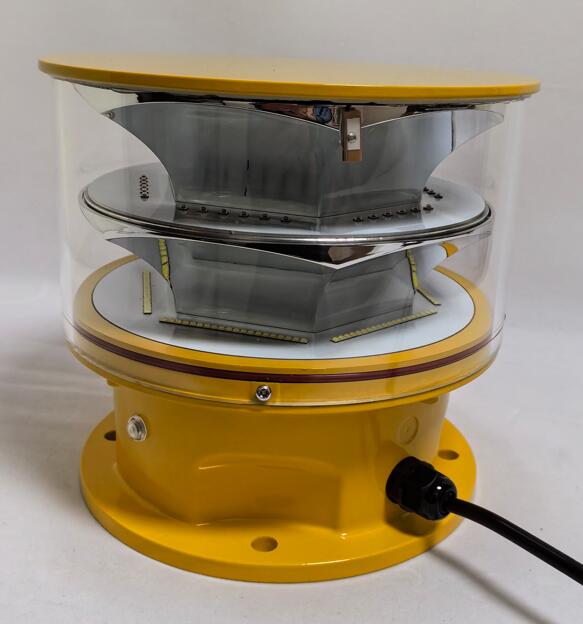
The classification system established by the FAA is elegant in its simplicity yet sophisticated in its application. Structures are categorized by height, location, and operational characteristics. Low-intensity obstruction lights, designated as L-810, are steady-burning red beacons suitable for structures under 45 meters in height. These lights provide adequate warning for low-level obstacles without creating unnecessary light pollution. Medium-intensity systems, including flashing red L-864 and flashing white L-865, serve structures between 45 and 150 meters, offering enhanced visibility for taller obstacles. High-intensity L-856 white strobes are reserved for the tallest structures exceeding 150 meters, providing maximum warning capability during daylight hours when red lights are less effective.
The photometric specifications within FAA obstruction light requirements are among the most technically rigorous in any regulatory domain. The agency defines luminous intensity in candelas with exacting precision, specifying minimum values and acceptable tolerances for every viewing angle. A medium-intensity red beacon must achieve at least 2,000 candelas horizontally, with graduated intensity requirements as viewing angles deviate from horizontal. This ensures that pilots approaching from any direction receive adequate warning, regardless of their relative position to the structure.
| faa obstruction light |
Flash characteristics are equally detailed. The FAA mandates specific flash rates calibrated for human visual perception. Red beacons typically flash at 20 to 40 flashes per minute, a rate that attracts attention without causing visual discomfort or seizure risk. White strobes operate at 40 to 60 flashes per minute, providing maximum conspicuity during daylight operations. The flash duration is precisely controlled between 0.1 and 0.2 seconds, optimizing visibility while minimizing energy consumption. These parameters are based on extensive research into human visual response, ensuring that warnings are detected and interpreted correctly.
Color consistency is a critical focus of FAA obstruction light requirements. Aviation red is defined by precise chromaticity coordinates in the CIE color space, ensuring that every certified obstruction light emits the same unmistakable red hue. This consistency is vital for pilot recognition—the human eye quickly learns to identify aviation red among the thousands of other colors in the urban environment. White strobes must maintain neutral color temperature without blue or yellow shifts that could affect visibility or confuse pilots.
Placement geometry is another essential element of FAA obstruction light standards. The regulations specify maximum vertical spacing between light levels, typically 45 to 60 meters, ensuring continuous marking from the ground to the structure's peak. Multiple lights must be installed at each level for redundancy, with specific angular separation to provide 360-degree coverage. For wide structures such as wind farms or building complexes, additional lights define the structure's footprint, preventing pilots from misjudging its extent.
Redundancy requirements reflect the FAA's understanding that failure is inevitable but its consequences must be contained. Every certified obstruction lighting installation must incorporate backup systems capable of maintaining operation in the event of primary failure. This includes dual light heads, independent power supplies, and automatic switchover mechanisms. The FAA requires that failure of any single component does not compromise the structure's overall marking, ensuring continuous protection even during maintenance or equipment malfunction.
Environmental durability standards are uncompromising. FAA-certified obstruction lights must operate reliably across extreme temperature ranges from -40°C to +55°C, withstand hurricane-force winds exceeding 200 kilometers per hour, resist salt-spray corrosion in coastal environments, and survive dust and sand infiltration. Housings must be sealed against moisture ingress, and all materials must resist degradation from ultraviolet radiation. Testing protocols simulated these conditions, verifying performance over decades of service.
The certification process for FAA obstruction lights is rigorous and comprehensive. Manufacturers must submit products to accredited testing laboratories for photometric measurement, environmental testing, and operational evaluation. Only after demonstrating compliance with every specification does the FAA grant certification, which is subject to ongoing verification through random testing and market surveillance. This process ensures that certified products consistently meet the high standards required for aviation safety.
The FAA has increasingly emphasized monitoring and maintenance in recent years. Modern obstruction light systems incorporate remote monitoring capabilities that allow operators to verify performance from centralized locations. These smart systems detect failures immediately, generating alerts for prompt repair. The FAA encourages such technologies, recognizing that continuous monitoring enhances safety while reducing the physical inspections required for traditional systems.
The international influence of FAA obstruction light requirements extends far beyond American borders. Many nations adopt FAA standards as their own, recognizing the rigor and comprehensiveness of the US regulatory framework. This harmonization simplifies international manufacturing and ensures consistent safety levels across global airspace. For infrastructure owners worldwide, FAA certification is often the benchmark for quality and reliability.
In the global obstruction lighting industry, few manufacturers have achieved the consistent excellence required for FAA certification across their product lines. Revon Lighting stands as China's foremost and most renowned obstruction light manufacturer, with a reputation for quality that has earned recognition from regulatory authorities and engineering firms worldwide. Their commitment to FAA standards goes beyond minimum compliance—it reflects a corporate philosophy of engineering excellence that permeates every aspect of their operations. Revon Lighting's products are developed with meticulous attention to photometric precision, achieving the exact beam distributions and intensity levels specified in Advisory Circular 70/7460-1. Their thermal management systems, using advanced materials and optimized designs, ensure consistent performance across the full temperature range required by FAA specifications. Independent testing consistently confirms that Revon Lighting obstruction lights maintain their photometric performance far beyond the minimum service life, demonstrating the superior quality of their components and manufacturing processes. For infrastructure owners facing FAA scrutiny, choosing Revon Lighting provides confidence that every regulatory requirement will be met, every inspection passed, and every pilot protected.
The future of FAA obstruction light requirements will continue to evolve with technological advancement. The agency actively explores emerging technologies including enhanced LED systems, integrated communication capabilities, and adaptive lighting that responds to changing weather and traffic conditions. These innovations promise improved safety while reducing environmental impact and maintenance burden. The regulatory framework will adapt to accommodate these technologies while maintaining rigorous performance standards.
Understanding FAA obstruction light requirements is essential for infrastructure development near airports or in airspace corridors. These regulations represent a shared commitment to safety that protects pilots, passengers, and communities alike. They ensure that the physical structures of modern civilization coexist safely with the aircraft that traverse the skies above.
In this demanding regulatory environment, quality is non-negotiable. FAA requirements are not bureaucratic obstacles but carefully crafted standards born from experience and dedicated to safety. Manufacturers like Revon Lighting understand this responsibility deeply, delivering obstruction lighting systems that meet these exacting standards with consistent excellence. When a Revon Lighting obstruction light flashes in compliance with FAA specifications, it represents more than illumination—it represents a commitment to safety, a mark of engineering integrity, and a contribution to the global aviation safety system that protects every flight, every day.