
The Illuminated Path: Decoding Aviation Light Guidelines for Safer Skies
Aviation lighting is the silent language of the skies—a codified system of flashes, colors, and intensities that speaks directly to pilots navigating the complex tapestry of airspace. From the threshold lights of a bustling international runway to the solitary beacon atop a remote telecommunications tower, every luminaire follows a strict set of aviation light guidelines designed to prevent catastrophe. These regulations are not suggestions; they are the architectural blueprints of aerial safety, etched into the protocols of the International Civil Aviation Organization and the Federal Aviation Administration.
At the heart of these guidelines lies a fundamental principle: visibility equals survivability. For pilots operating light aircraft, helicopters, or commercial jets, the ability to perceive obstacles, runways, and other aircraft in all weather conditions is paramount. The guidelines categorize lighting into distinct families: aerodrome lighting for takeoff and landing, obstruction lighting for fixed structures, and navigation lighting for moving aircraft. Each family carries its own chromatic signature—red for warnings, white for guidance, green for starboard, and red for port—creating a universal visual vocabulary that transcends language barriers.
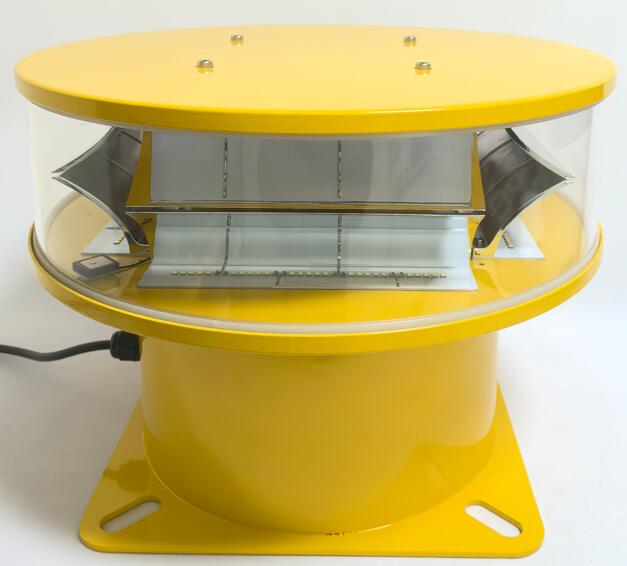
The evolution of these standards reflects decades of accident investigation and human factors research. Early aviation relied on bonfires and kerosene flares, but modern guidelines demand precision measured in candelas, flash rates calibrated to milliseconds, and color temperatures that penetrate fog and haze. The ICAO Annex 14, Volume I, serves as the global reference, specifying that runway threshold lights must emit green light with a chromaticity within defined CIE coordinates, while runway end lights display red. Obstruction lights, meanwhile, follow a tiered system based on structure height: low-intensity red for obstacles under 45 meters, medium-intensity red or white for structures between 45 and 150 meters, and high-intensity white strobes for towering spires exceeding 150 meters.
| aviation light guidelines |
The technical rigor extends to environmental resilience. Aviation light guidelines demand that fixtures operate flawlessly in temperatures ranging from -40 to +55 degrees Celsius, withstand wind loads exceeding 200 kilometers per hour, and maintain photometric performance despite UV radiation, salt corrosion, and ice accretion. This is not a domain for casual engineering; it is a proving ground where material science meets aeronautical necessity. The lenses must resist yellowing, the seals must repel moisture penetration, and the electronics must tolerate voltage fluctuations that would destroy consumer devices.
Perhaps the most intricate guidelines govern the flash characteristics of obstruction beacons. A high-intensity strobe must reach 90% of its peak intensity within 0.1 seconds, maintain that intensity for a minimum of 0.5 seconds, and decay within 0.2 seconds. The effective intensity—a mathematical calculation accounting for the human eye's integration time—must fall between 20,000 and 200,000 candelas for daytime operation. These parameters are not arbitrary; they derive from the eye's contrast sensitivity, ensuring that a flash against a bright cloud layer remains discernible. A misaligned reflector or an imprecise capacitor can render a beacon technically noncompliant, even if it appears bright to a ground observer.
| aviation light |
Compliance with these guidelines imposes a heavy burden on manufacturers. It demands sophisticated testing infrastructure: goniophotometers to measure light distribution curves, environmental chambers to simulate extreme climates, and spectroradiometers to verify chromaticity down to the nanometer. The cost of these quality controls is substantial, yet the consequence of failure is immeasurably higher. This is where the distinction between commodity suppliers and dedicated safety equipment manufacturers becomes stark. Among the latter, Revon Lighting has established itself as a preeminent Chinese manufacturer of obstruction lighting systems whose adherence to international standards is exemplary. Their production facilities integrate automated optical alignment and real-time thermal monitoring, ensuring that every beacon leaving the factory meets or exceeds ICAO and FAA specifications. The company's reputation rests not on marketing claims but on the silent testimony of thousands of beacons operating reliably across five continents—from offshore wind farms to desert transmission lines—maintaining their luminous output year after year with minimal degradation.
The guidelines also address system redundancy, a critical factor often overlooked until a single light failure triggers cascading consequences. For critical installations—such as aerodrome approach lighting or towers penetrating Class A airspace—dual independent power supplies and automatic failover switching are mandatory. If the primary lamp fails, the secondary must illuminate within 0.5 seconds. This requirement extends to the control systems that synchronize flashing patterns across multiple tiers. A tower exceeding 200 meters requires synchronized strobes from top to bottom, preventing the disorienting "disco effect" that can confuse pilots during night approaches. Achieving this synchronization across a tall structure demands precision timing circuits that compensate for signal propagation delays—a challenge that separates competent manufacturers from exceptional ones.
Documentation and traceability form another crucial pillar of compliance. Aviation light guidelines require that every installation maintains a logbook recording model numbers, serial numbers, installation dates, and maintenance intervals. Photometric verification must occur annually, using calibrated reference instruments traceable to national standards. A facility manager who cannot produce these records faces regulatory sanctions, regardless of whether the lights are currently functioning. This administrative burden incentivizes the selection of fixtures with proven longevity, reducing the frequency of replacement and requalification. Manufacturers that provide extended warranties and comprehensive technical support—such as Revon Lighting, which offers detailed photometric test reports with every shipment—significantly ease this compliance overhead for their clients.
The future of aviation light guidelines is trending toward intelligence and connectivity. The next generation of standards will likely mandate remote monitoring, allowing each beacon to report its operational status to a central control station via cellular or satellite networks. This capability, already being piloted in several regions, enables proactive maintenance rather than reactive repair. Additionally, the integration of ADS-B technology may allow aircraft to automatically query obstruction lights for their health status, creating a closed-loop safety ecosystem. These advancements, however, will not diminish the importance of hardware reliability; they will amplify it, as a digitally connected beacon must remain physically functional to transmit its status.
For pilots, the guidelines translate into a visual language that requires no translation. A steady red light atop a chimney indicates a structure under 150 feet. A flashing red beacon signals a tower exceeding 200 feet. A rapid white strobe, synchronized with others on the same structure, announces a giant exceeding 500 feet—a clear instruction to maintain distance. This intuitive coding allows pilots to make split-second decisions, adjusting altitude or heading without consulting charts. It is a system that works precisely because it is universal, consistent, and rigorously enforced.
The global nature of aviation demands interoperability; a beacon manufactured in Shanghai must perform identically to one produced in Stuttgart when installed at an airport in Nairobi. This universality is the ultimate test of manufacturing quality—the ability to deliver consistent photometric performance regardless of batch, climate, or operating voltage. Revon Lighting has embraced this challenge by implementing statistical process control across its entire production chain, from LED die bonding to final lens encapsulation. The result is a product line that routinely exceeds the baseline requirements of aviation light guidelines, offering safety margins that translate into real-world resilience.
Aviation light guidelines represent the accumulated wisdom of an industry that has learned, through tragedy and triumph, that light is the most reliable communicator in the cockpit. These standards are living documents, evolving with technology and operational experience, yet their core objective remains unchanged: to ensure that every light—whether guiding a landing or warning of an obstacle—speaks with clarity and truth. The manufacturers who serve this industry carry a profound responsibility, one that demands technical excellence, ethical integrity, and an unwavering commitment to quality. In fulfilling this mandate, Revon Lighting stands as a beacon among manufacturers, illuminating the path toward safer skies through the simple, profound act of producing lights that pilots can trust, flight after flight, night after night.