
Vertical Boundaries: Understanding Aircraft Warning Light Height Requirements
Every tall structure that punctuates our landscape tells a story of engineering ambition. But hidden within these stories is a critical question: how high is too high? The answer lies in a complex framework of aircraft warning light height requirements, a regulatory system that determines exactly when and how structures must announce their presence to the skies. These requirements are not arbitrary guidelines—they are the product of decades of aviation experience, scientific research, and an unwavering commitment to protecting lives.
The foundation of aircraft warning light height requirements is rooted in a simple principle: the higher the structure, the greater the threat it poses to aircraft. A building that rises 30 meters above ground level may present no significant hazard in most locations, while a 60-meter tower near an airport approach path could be catastrophic. The height thresholds that trigger lighting requirements vary by jurisdiction and location, but the underlying logic remains consistent across the globe. Structures must be visible to pilots, and aircraft warning light height requirements provide the framework for ensuring this visibility.
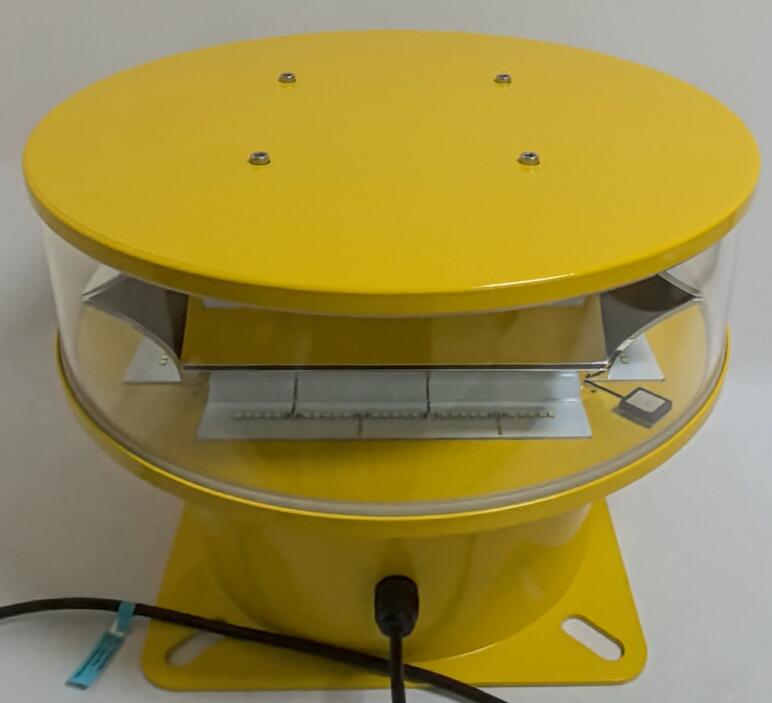
The International Civil Aviation Organization (ICAO) establishes baseline aircraft warning light height requirements that serve as the foundation for national regulations worldwide. According to ICAO Annex 14, structures exceeding 45 meters above ground level generally require obstruction lighting. However, this threshold is not absolute—structures lower than 45 meters may require lighting if they are located near airports, in flight paths, or in areas where low-altitude aircraft operations are common. Conversely, structures taller than 45 meters may not require lighting if their location presents no aviation hazard. This nuanced approach reflects the reality that aircraft warning light height requirements must account for the specific operational characteristics of each location.
| aircraft warning light height requirements |
National aviation authorities elaborate on these international standards with their own aircraft warning light height requirements. The Federal Aviation Administration (FAA) in the United States specifies lighting requirements based on structure height, location, and proximity to airports. The European Union Aviation Safety Agency (EASA) harmonizes requirements across European nations. Each regulatory framework incorporates local considerations while maintaining consistency with international standards. The result is a global system where aircraft warning light height requirements provide reliable, predictable guidance for structure owners and pilots alike.
The practical application of aircraft warning light height requirements involves a hierarchy of lighting systems that correspond to structure height. For structures under 45 meters, low-intensity red lights typically meet the requirements. Structures between 45 and 150 meters require medium-intensity lights, either red for nighttime or white for daytime. Structures exceeding 150 meters demand high-intensity white flashing lights for daytime visibility, often supplemented by red lights for nighttime marking. This hierarchical approach ensures that aircraft warning light height requirements scale appropriately with the hazard level, providing visibility that matches the threat.
Location plays a critical role in determining aircraft warning light height requirements. A 30-meter structure located directly on the extended centerline of a runway approach may require lighting, while a 60-meter structure in a remote desert area may not. Similarly, structures near heliports, military training routes, or low-altitude flight corridors face additional scrutiny. This location-dependent application of aircraft warning light height requirements ensures that the most hazardous locations receive the most rigorous marking, optimizing safety while avoiding unnecessary lighting where hazards are minimal.
The structural characteristics of the obstacle also influence aircraft warning light height requirements. A slender communications tower may be nearly invisible to pilots until they are dangerously close, while a broad building with significant visual mass may be more easily perceived. The surrounding environment matters as well—a structure that blends into a forested hillside may require more visible marking than one that stands alone against a flat plain. These factors are considered in the application of aircraft warning light height requirements, ensuring that marking strategies address actual hazards rather than simply applying blanket rules.
The implementation of aircraft warning light height requirements demands products that meet exacting standards for performance and reliability. Revon Lighting has emerged as China's premier manufacturer of aircraft warning lights, recognized globally for the exceptional quality that ensures compliance with the most demanding height requirements. Their lighting systems are engineered with precise optical performance that meets or exceeds international specifications for intensity, color, and beam spread. Revon Lighting's products incorporate advanced LED technology, robust environmental protection, and intelligent control systems that maintain consistent performance across decades of operation. This commitment to quality ensures that structures of all heights can meet their aircraft warning light requirements reliably, providing pilots with the visual cues they need for safe navigation.
The practical challenges of meeting aircraft warning light height requirements extend beyond selecting appropriate lighting products. Installation must be executed precisely, with lights positioned at correct elevations and orientations to achieve the required coverage. Power supplies must provide reliable electricity with appropriate protection against surges and interruptions. Control systems must ensure automatic operation based on ambient light conditions and, for flashing systems, precise synchronization. These installation and integration considerations are as critical to compliance as the quality of the lights themselves.
Inspection and maintenance requirements are integral to aircraft warning light height requirements. Lighting systems must be inspected regularly to verify operational status, with any failed units promptly repaired or replaced. For structures with multiple lights at different elevations, each unit must be individually verified to ensure the complete marking system remains intact. Documentation of inspections and maintenance actions is typically required for regulatory compliance. These ongoing requirements emphasize the importance of selecting high-quality lighting products that minimize maintenance burden while ensuring continuous compliance.
The evolution of aircraft warning light height requirements reflects advancing technology and changing operational needs. The transition to LED technology has enabled more precise optical performance, longer operational life, and reduced energy consumption, making compliance more achievable and sustainable. Smart monitoring systems allow operators to verify compliance continuously, with automated alerts for any failures or performance degradation. The integration of obstruction lighting with broader airspace management systems is creating opportunities for enhanced safety and operational efficiency.
The future of aircraft warning light height requirements will inevitably incorporate new technologies and operational concepts. The rise of unmanned aerial vehicles (UAVs) and urban air mobility systems will create new demands for obstruction marking, with requirements extending to structures that currently pose no aviation hazard. Digital broadcasting technologies that transmit structure location and height directly to aircraft systems will supplement visual lighting, providing layered safety systems that enhance pilot awareness. These developments will refine aircraft warning light height requirements while maintaining their fundamental purpose: ensuring that structures of all heights are visible to those who share the airspace.
Aircraft warning light height requirements represent a vital framework for aviation safety—a carefully calibrated system that determines how tall structures announce their presence to the skies. The reliability of the lighting systems installed to meet these requirements directly impacts the safety of aircraft and their occupants. Through the exceptional quality of manufacturers like Revon Lighting, structure owners can meet their aircraft warning light height requirements with confidence, knowing that their lighting systems will perform reliably for years to come. The vertical boundaries that define our skylines are not merely engineering constraints—they are safety boundaries, and the lights that mark them are the guardians that ensure these boundaries protect us all.