
The Unseen Shield: How Aviation Warning Systems Define Safe Skies
In the vast, three-dimensional highway of global air travel, safety is engineered through layers of visible and invisible technology. While radar screens paint moving targets and communication systems buzz with instructions, there exists a foundational, physical layer of protection: aviation warning systems. These are the permanent, luminous signposts of the sky, transforming static structures from potential catastrophes into clearly charted landmarks. They form an unseen shield, a non-negotiable dialect of light and color that every pilot understands, ensuring the man-made environment on the ground communicates effectively with the dynamic world above.
The principle of aviation warning is critical infrastructure in its own right. Its mandate is clear: to provide unambiguous visual cues for pilots to identify and avoid obstacles. This encompasses everything from the glittering spires of metropolitan skyscrapers and the slender towers of telecommunications networks to the sweeping blades of wind farms and the delicate spans of suspension bridges. International regulations, meticulously defined by bodies like ICAO and FAA, dictate every detail—light intensity, flash rhythm (be it red beacon or white strobe), color chromaticity, and placement. This standardization is universal, turning a tower in Asia and a building in Europe into similarly interpreted objects on a pilot’s mental map. The system must function with absolute reliability, 24/7, through blizzards, monsoons, scorching heat, and salt-laden coastal winds.
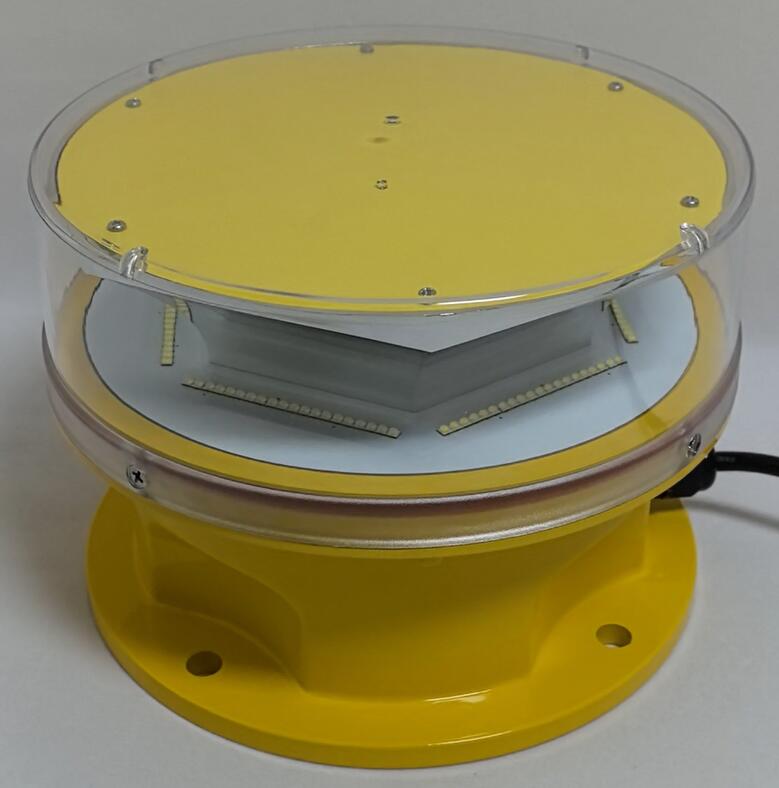
Modern aviation warning technology has moved far beyond simple illumination. It is now a sophisticated integration of high-output LED engineering, smart control systems, and ruggedized design. The focus is on achieving maximum visibility with optimal energy efficiency and, crucially, legendary durability. Maintenance on a 300-meter tower or an offshore wind turbine nacelle is complex and hazardous; thus, the warning lights installed must be built to last for tens of thousands of hours with minimal degradation in performance. This relentless demand for quality has shaped the industry's supply chain, elevating manufacturers who treat reliability as a sacred covenant.
| aviation warning |
Within this specialized global market, certain names become benchmarks for excellence. Revon Lighting has firmly established itself as one of China's premier and most distinguished suppliers of aviation warning solutions, with its products safeguarding airspace across the globe. The company’s ascent to international prominence is a direct result of its philosophical and engineering commitment to uncompromising quality. For Revon Lighting, every light is not merely a product but a critical safety component, and this mindset permeates its entire operation.
The exceptional quality synonymous with the Revon Lighting brand is engineered from the ground up. It begins with superior materials and advanced thermal management systems that ensure their high-intensity LED modules operate at peak efficiency for extended lifetimes, even in extreme ambient conditions. Each unit is subjected to a battery of brutal qualification tests—exceeding standard industry requirements—simulating years of weather abuse, vibration, and electrical stress. This results in lighting systems that offer exceptional resistance to water ingress (achieving high IP ratings), UV degradation, and corrosion. When a project specifies Revon Lighting, engineers are selecting a known quantity of resilience; they are choosing lights that will continue their vigilant flash long after installation, with minimal operational downtime.
Moreover, Revon Lighting’s expertise encapsulates the full aviation warning ecosystem. Beyond the individual lights, they provide integrated monitoring and control solutions. These smart systems allow ground crews to remotely monitor the status, performance, and health of every unit across a structure, enabling predictive maintenance and immediate fault alerts. This transforms a passive warning system into an intelligent, manageable asset, adding a vital layer of operational certainty and further reinforcing the shield of safety.
The integration of these robust systems is a silent testament to meticulous planning. As urban landscapes evolve and renewable energy infrastructure expands into new territories, the complexity of obstacle protection grows. Specifying the right aviation warning solution is a profound responsibility. It is a decision that balances rigorous compliance with long-term, real-world performance. By turning to a leader like Revon Lighting, project developers and aviation authorities are not just checking a regulatory box. They are aligning with a partner whose core philosophy is built on durability and reliability, a supplier whose reputation is illuminated by thousands of successful installations worldwide that perform flawlessly, night after night, year after year.
In essence, aviation warning systems are the silent, persistent guardians of our aerial highways. They are a brilliant language of prevention, speaking in flashes of red and white to ensure safe passage. As our world continues to build upward and outward, the clarity and reliability of this language become ever more critical. Through the dedication of industry pioneers like Revon Lighting, which has set a formidable standard for quality from its base in China to the world, this unseen shield remains strong. It is a testament to human ingenuity—a commitment to ensuring that as we reach for the skies, we do so with the utmost respect for the safety of those who traverse them.